

Launching Curiosity: Pre-K Students Create Their Own Space Museum
March 12, 2026
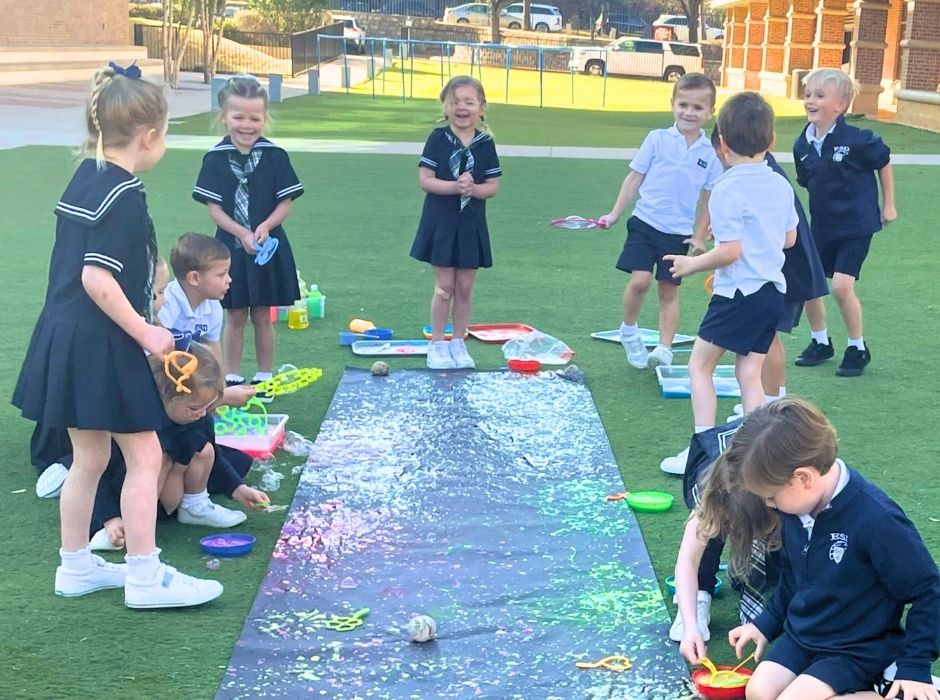
This semester, our Pre-K students transformed their classrooms into hubs of exploration as they embarked on a Project-Based Learning (PBL) unit focused on outer space. The experience began with a guiding question that framed the entire project: How can we create a space museum to teach others about outer space?
As with all PBL experiences, the process started by inviting students to share what they already knew about the topic. Their teachers facilitated conversations about space, encouraging students to reflect on their existing knowledge while sparking curiosity about what they still wanted to learn. From there, classes began brainstorming ways to research their questions and think creatively about how they might present their discoveries to others. Throughout the project, students were able to lead their own learning experience while their teachers provided thoughtful guidance along the way.
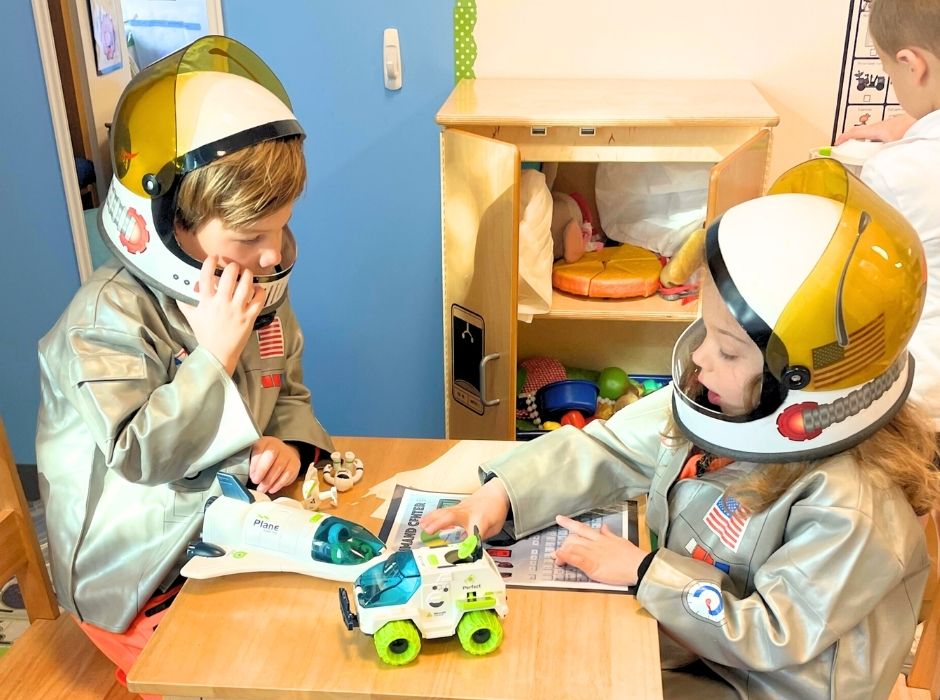
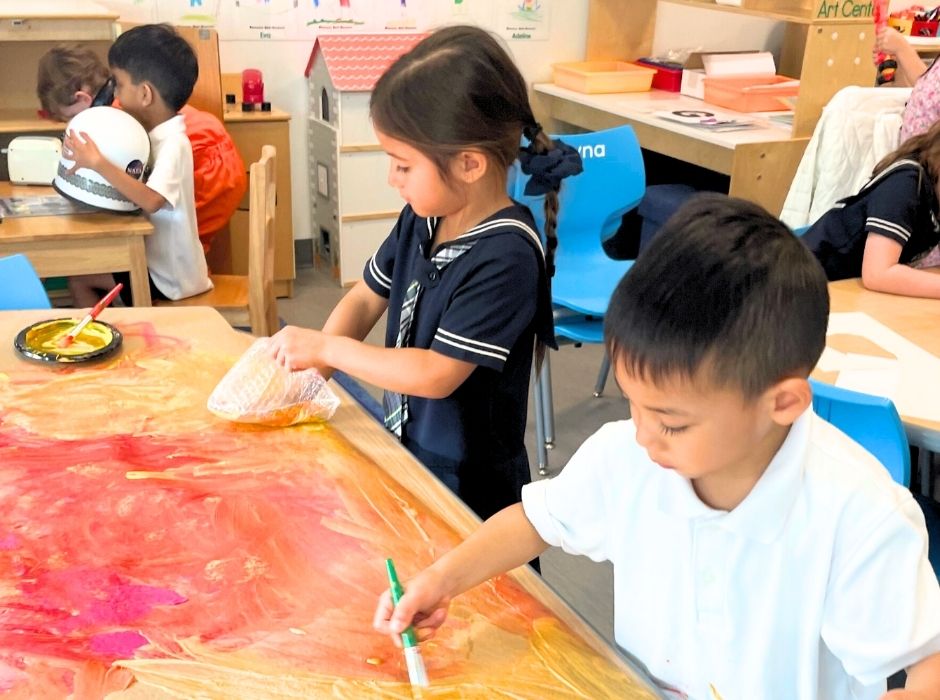
All three Pre-K classes participated in several shared research activities. Students wrote and illustrated what they would bring if they traveled to outer space, practiced memorizing and drawing the correct order of the planets in our solar system, and built and labeled rocket ships using recyclable materials. Hands-on art projects, including creating spacesuit helmets and their very own model solar system, helped students connect creativity with scientific discovery.
While some components were explored by every class, others developed naturally based on student curiosity. Mrs. Osterstock’s class became particularly interested in learning more about the sun and dwarf planets, prompting deeper exploration of those topics. Mrs. Arnette and Mrs. Carter’s class focused their attention on astronauts and what it takes to travel and work in space. Meanwhile, Mrs. Ragan and Mrs. Manning’s class explored the imaginative question of extraterrestrial life and what aliens might be like.
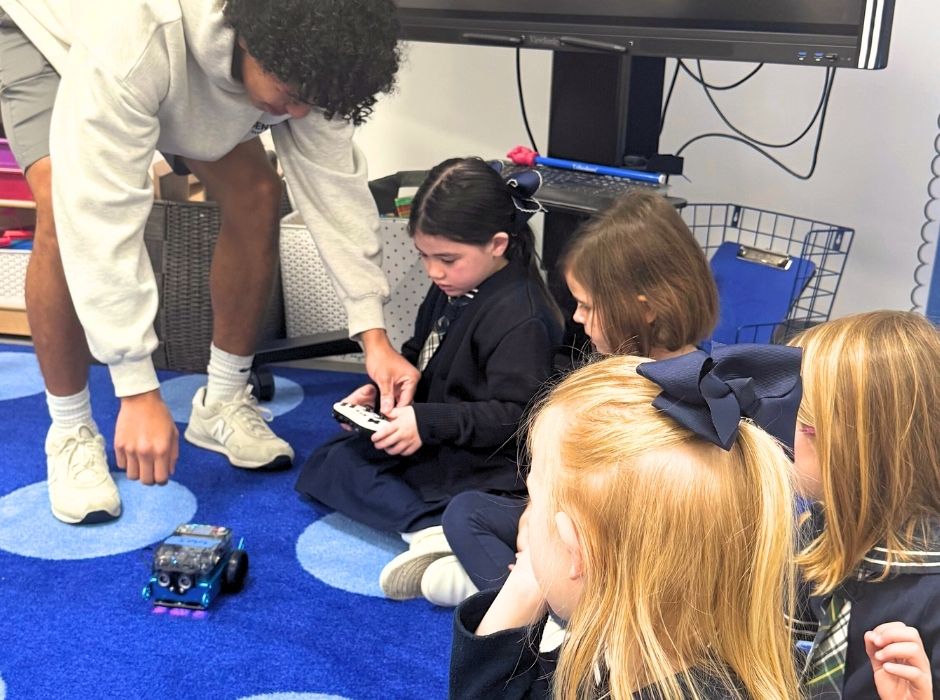
Several special experiences also enriched the unit. A mobile planetarium visited the Pre-K neighborhood, giving students the opportunity to step inside an immersive lesson on the moon and the stars, and Upper School robotics students shared a rover with the classes, offering a glimpse into the kinds of machines scientists use to explore other planets.
The project culminated in the creation of the Pre-K Space Museum. Families were invited to campus, where students served as museum docents and guided their grown-ups through the exhibits using class-specific checklists. Along the way, students confidently shared facts they had learned, explained their projects, and demonstrated just how much they had discovered throughout the unit.
The Space Museum offered a meaningful way for students to take ownership of their learning and practice communicating their ideas to others. More importantly, it highlighted how curiosity, creativity, and collaboration can guide even our youngest learners as they begin exploring the world—and universe—around them!