

Upper School Students Weave Modern Interpretation and Rigorous Literary Discourse into Studies. of The Scarlet Letter
September 26, 2025
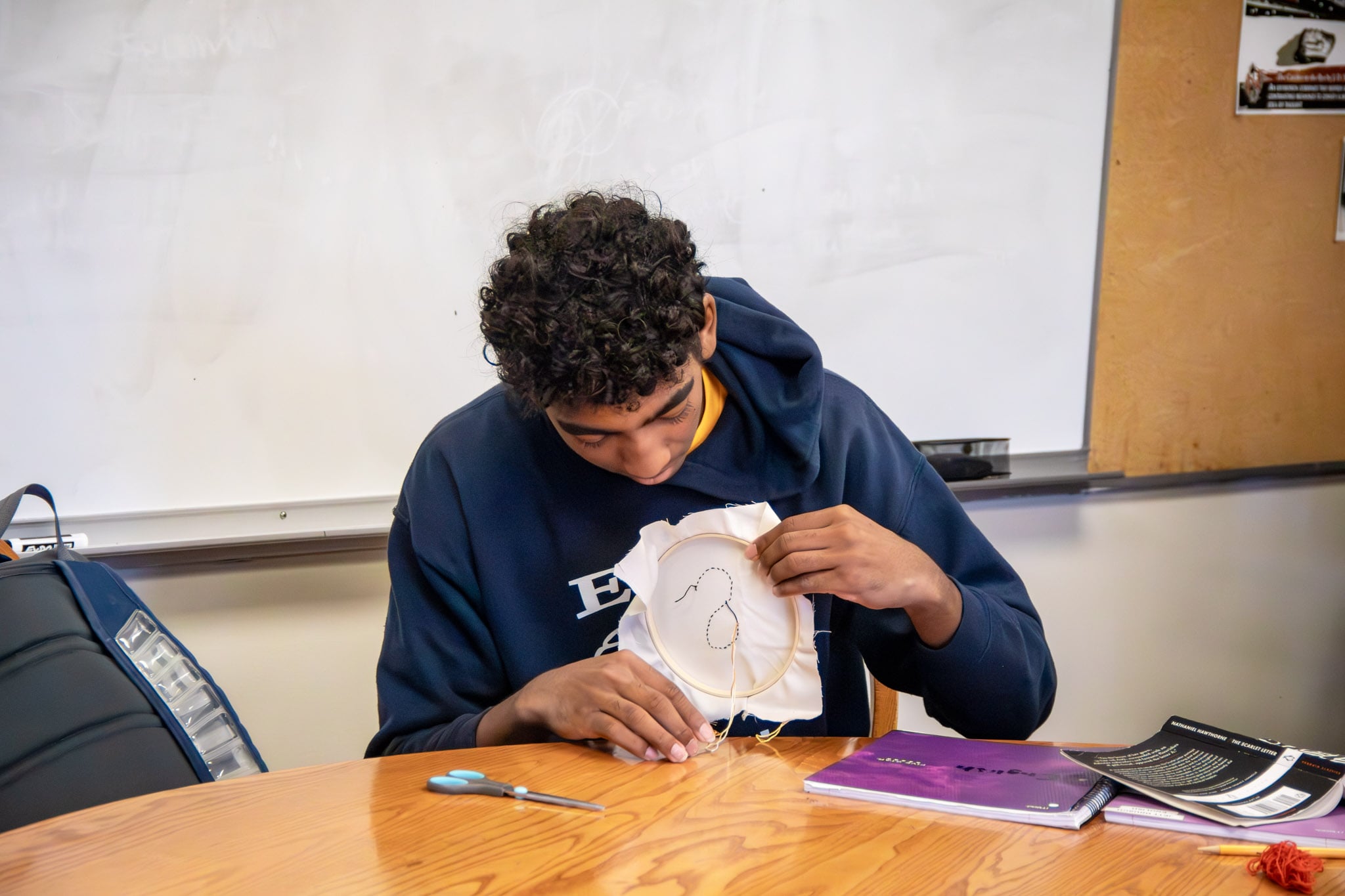
The Upper School English classes have stepped beyond the page and into a realm of immersive literary analysis, using thread and needle to interpret Nathaniel Hawthorne’s classic, The Scarlet Letter. This hands-on project transforms the study of 19th-century literature into a dynamic exercise in symbolism and critical engagement, demonstrating the power of creative education to deepen academic rigor.
The inspiration lies in the complex journey of Hester Prynne. As the novel progresses, the fiery “A” on Hester’s gown—initially a mark of shame—begins to evolve in the eyes of the Puritan townspeople, shifting to represent ‘Able’ for her strength and even ‘Angel’ in a celestial moment described by Hawthorne. However, the actual lesson, which forms the anchor of this assignment, is Hester’s ultimate act of self-definition, refusing to let society’s interpretation diminish her personal dignity by living a purposeful life that redefines the symbol on her own terms.
Interdisciplinary Rigor and Intentional Design
This assignment is a hallmark of the Upper School's dedication to rigorous, engaging academic programming that challenges students to develop complex skill sets beyond traditional reading and writing. Students were asked to think about the idea of a symbol that might represent something positive about themselves —a mark of honor that reveals the best parts of their character — even if others did not see or perceive it the same way. Students spent time brainstorming the one letter that might stand for a core part of their identity, a quality they possessed, or a value they held dear–regardless of what others might prescribe to them based upon external factors. This exercise required students to act as both scholar and artist, analyzing how a symbol’s meaning can be inverted or transformed.
The design phase compels students to delve into the layered meanings of color symbolism, texture, and typography; the deliberate selection of hues and stitching patterns had to convey their precise understanding and critical interpretation of the textual concept. Much like a writer carefully chooses every word, students meticulously planned their design, developed their analytical dexterity, and gained visceral insight into the techniques of literary craft, revealing how authors intentionally create deep connotative meaning.
By physically paralleling the narrative, embroidery encouraged students to contemplate the deliberate, painstaking process by which the main character expressed her individuality and skill, provided for herself and her daughter, and understood how identity and societal values are “stitched” and redefined over time. The focused effort reinforced the concept of resilience and the deep interpretive conviction required to stand proudly by one’s own understanding of the self, especially in light of the text.
From Needlework to New Discourse
This synthesis of the artisanal and the analytical ensures that the creative process reinforces high academic standards. The embroidery is not merely a craft project; it is the central evidence for the culminating analytical essay.
In the assignment’s written portion, students used their embroidered symbol as a lens for critical exploration. They engaged with profound questions about textual interpretation, societal judgment, and the power of individual will. By weaving at least three relevant quotations from The Scarlet Letter into their critical response, students put their own understandings (with regard to the self and symbolism) into direct conversation with Hawthorne’s characters and core ideas. This final reflection allowed them not only to better understand the enduring human experience illuminated by Hester Prynne but also to articulate their own critical insights with clarity, creativity, and sophisticated literary analysis.